
Forested Swamps

In short, a swamp is a wetland that is dominated by woody plant cover. Swamps can be further divided into plant communities based on the type of trees, shrubs, and hydrology.
Hardwood Swamp
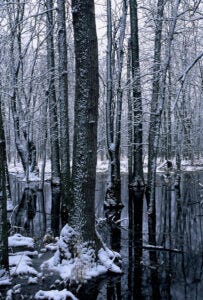
Hardwood swamps are wetlands dominated by trees. Green Ash (Fraxinus pennsylvanica), Black Ash (Fraxinus nigra), and Silver Maple (Acer saccharinum) are common trees found in swamps. Due to invasion by the Emerald Ash borer, the ash species are likely doomed to become minor players in American swamps, like the American Elm (Ulmus americana) and other native elm trees that non-native diseases and pests have decimated. Hardwood swamps are usually flooded in the spring and have a high water table for the rest of the year.
Floodplain Forest
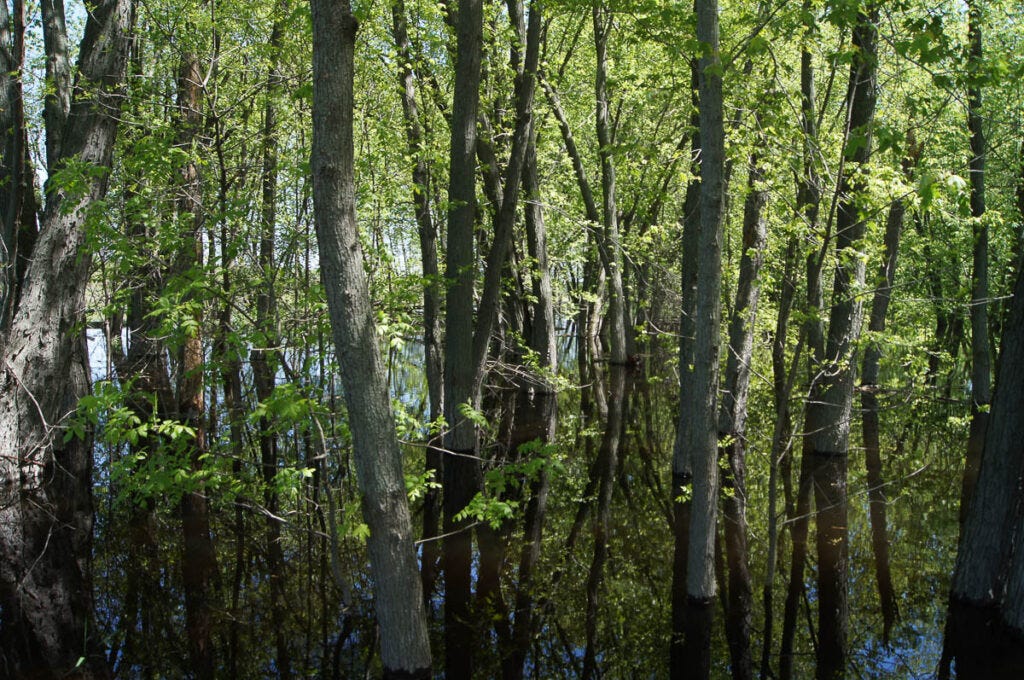
Floodplain forests have many of the same features and plant species found in hardwood swamp habitats, but are influenced by the floodwaters of rivers. Flooding rivers bring in silt, nutrients, and seeds. The flowing waters also remove and shift the soil and detritus of the forest. The water table can vary more seasonally than Hardwood Swamps, being above the water table in the spring, and then lower than that of the Hardwood Swamp in summer. For these reasons, the Floodplain Forest is a more dynamic ecosystem. The Eastern Cottonwood (Populus deltoides) is ubiquitous here; its seeds germinate on the exposed sediments, and its small, broken branches will take root as water levels drop. Many species of Willows (Salix spp.), both trees and shrubs, have the same reproductive properties as cottonwood, which makes them common in floodplain forests. The flood frequency of floodplain forests can run from yearly to many decades between floods.
Coniferous Swamp
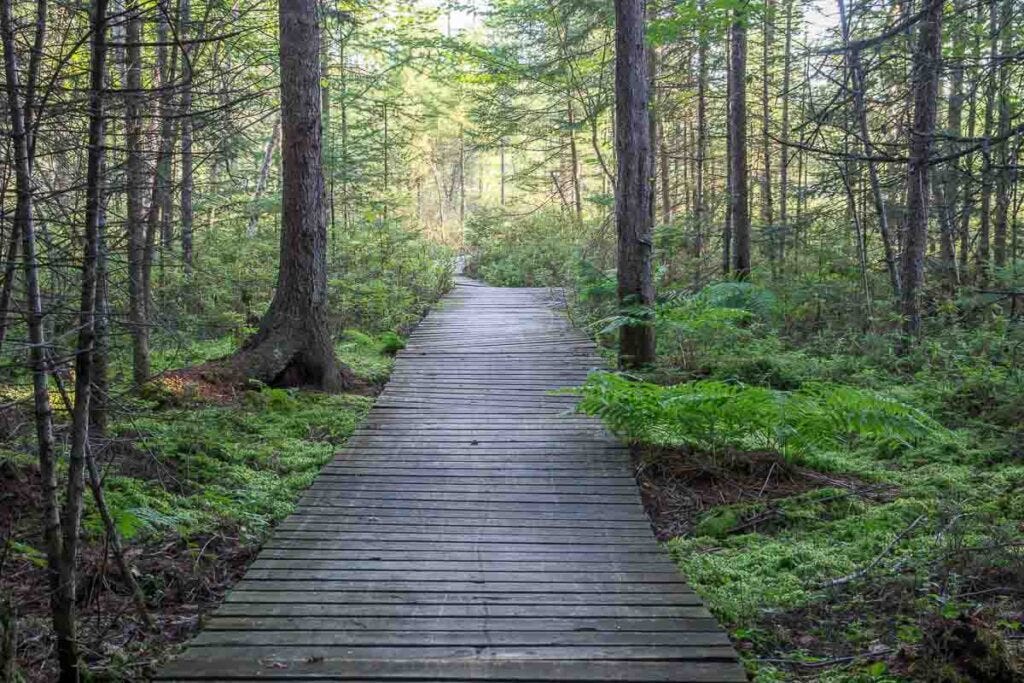
Unlike the hardwood swamp and floodplain forest, coniferous swamps can vary considerably in the tree species that dominate. The trees give rise to the name of each type of swamp: White Cedar, Tamarack, and Black Spruce swamps. Minerals, nutrients, and pH soil conditions typically drive what kind of species dominate. Mineral-rich, basic pH swamps are usually dominated by Eastern White Cedar, and Black Spruce often dominate nutrient-poor, acidic swamps. Each type of swamp may have all three species of trees; nature seldom has definite lines between plant communities. A swamp with its ground covered with Sphagnum Moss is called a coniferous bog.
Wood Cutting in Swamps
The value of tree species for lumber, pulp, and other products can vary significantly, from very valuable, like Black Walnut, to very little, like Eastern Cottonwood. No matter the value, precautions must be taken when harvesting timber in wetlands. Moving heavy equipment in wetlands causes ruts, which can change drainage patterns, and the equipment can get stuck in the soft water-saturated soils. During snowmelt and heavy rains, these ruts can send nutrients and sediment into surface water, causing sedimentation, turbidity, and algae blooms. Harvesting trees with special low ground pressure equipment that reduces impact, or when the ground is frozen, is preferable.
Trees help support each other by reducing wind. This is especially important in swamps where the high water table causes root systems to be shallow, and the trees are prone to wind throw. Removing too many trees from a swamp increases the chance that the remaining trees will be knocked over in a strong windstorm.
Swamp Plant Species
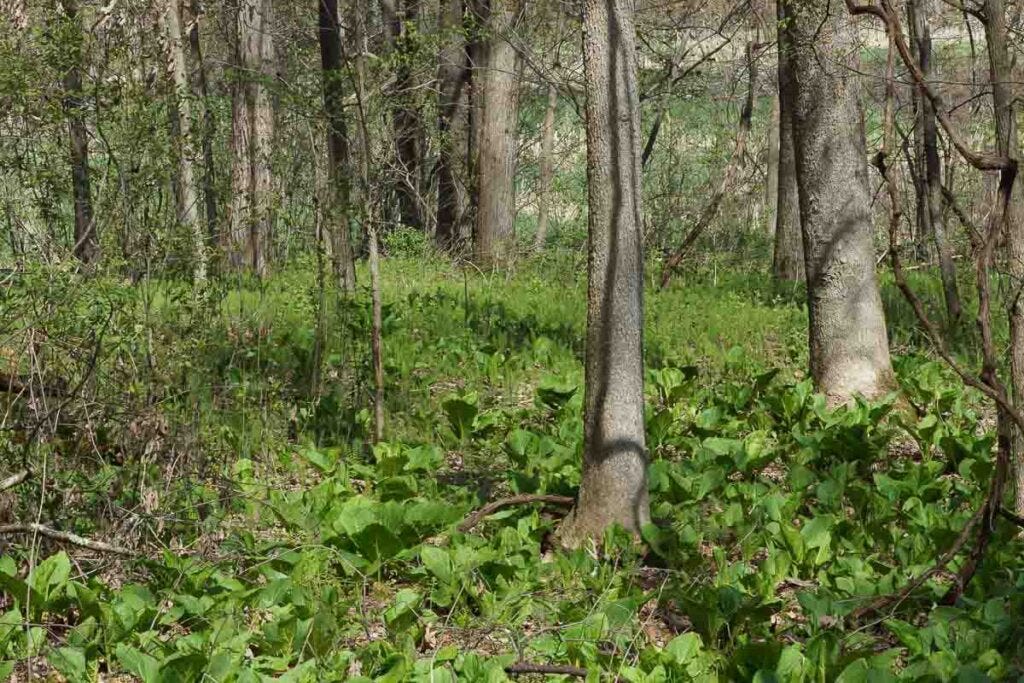
While the tree canopy dominates, many interesting species of plants grow on the forest floor. In early spring, even before the snow has melted, Skunk Cabbage flowers melt the surrounding snow and are pollinated by flies. As spring progresses, many other wildflowers begin to bloom. Probably one of the showiest of the spring flowers is Marsh Marigold, with its bright yellow flowers. In very late spring or early summer, Northern Blue Flag Iris shows its striking blue blooms. The ground of many of my local swamps is now covered with the invasive Reed Canarygrass, which outcompetes the native grasses, sedges, and wildflowers.
Swamp Trees
Trees in all wetlands have shallow root systems to avoid oxygen depletion. These root systems make trees growing in wetlands less stable and more prone to tipping over during high winds than the same species grown on uplands. Trees and shrubs have evolved several physical adaptations to cope with saturated soil and standing water. The first are lenticels, which are pores in the bark that allow for gas exchange. The second are pneumatophores, which are root structures like the knees found in Cypress swamps. Pneumatophores protrude above the water and saturated soils to facilitate gas exchange between the roots and the atmosphere.