
What is Detritus?
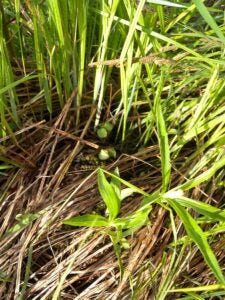
Detritus is debris or waste of any kind. When we think specifically of detritus in lakes and wetlands, we think of the undecayed organic matter of plants and animals. This is typically the primary source of nutrients in a body of water. The source of detritus can be organisms that grew within the lake or those that came from outside the lake.
Outside sources of Detritus
Erosion can bring in all kinds of organic matter, usually from plants. Depending on the location of a body of water or wetland, the primary source can be quite variable. In a river with a large floodplain, the primary source may come from when the river overflows its banks and picks up organic matter from flooded wetlands, farm fields, and woodlands.
A small lake or rivers, big and small, in a forested setting may get most of their nutrient inputs as leaf fall. The leaves of overhanging trees land in the water, sink, and aquatic organisms begin to break them down. First, come the "shredder" invertebrates. These are able to shred tough leaves into smaller pieces that they eat, or others eat the scraps. Then an assortment of other invertebrates continues to eat the smaller pieces or the microorganisms that further break them down. Without this source of nutrients, many streams would be sterile.
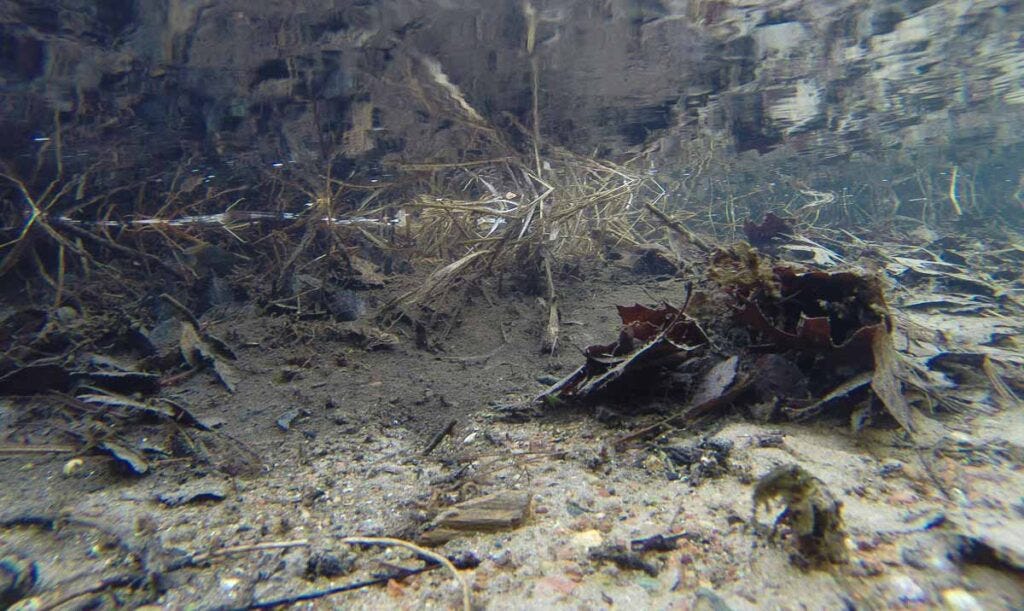
Some lakes, like those high in the mountains, have little or no surrounding source of nutrients. Without inputs, these lakes can be largely absent of aquatic life because there is nothing to feed algae or aquatic plants, and therefore no source of energy to move up the food chain.
As detritus breaks down into smaller and smaller pieces, it eventually turns into muck, which can still be high in nutrients. Because muck is made of such small particles, it is easily washed away, unless it is in some protected bay or colonized by aquatic plants.
Sometimes, the environment prevents the complete breakdown of plant detritus. When this happens over time, peat forms. Peat is mainly made up of the leaves, stems, and roots of mosses, sedges, and other plants of bogs, sedge meadows, and other wetlands.